Sourdough Bread
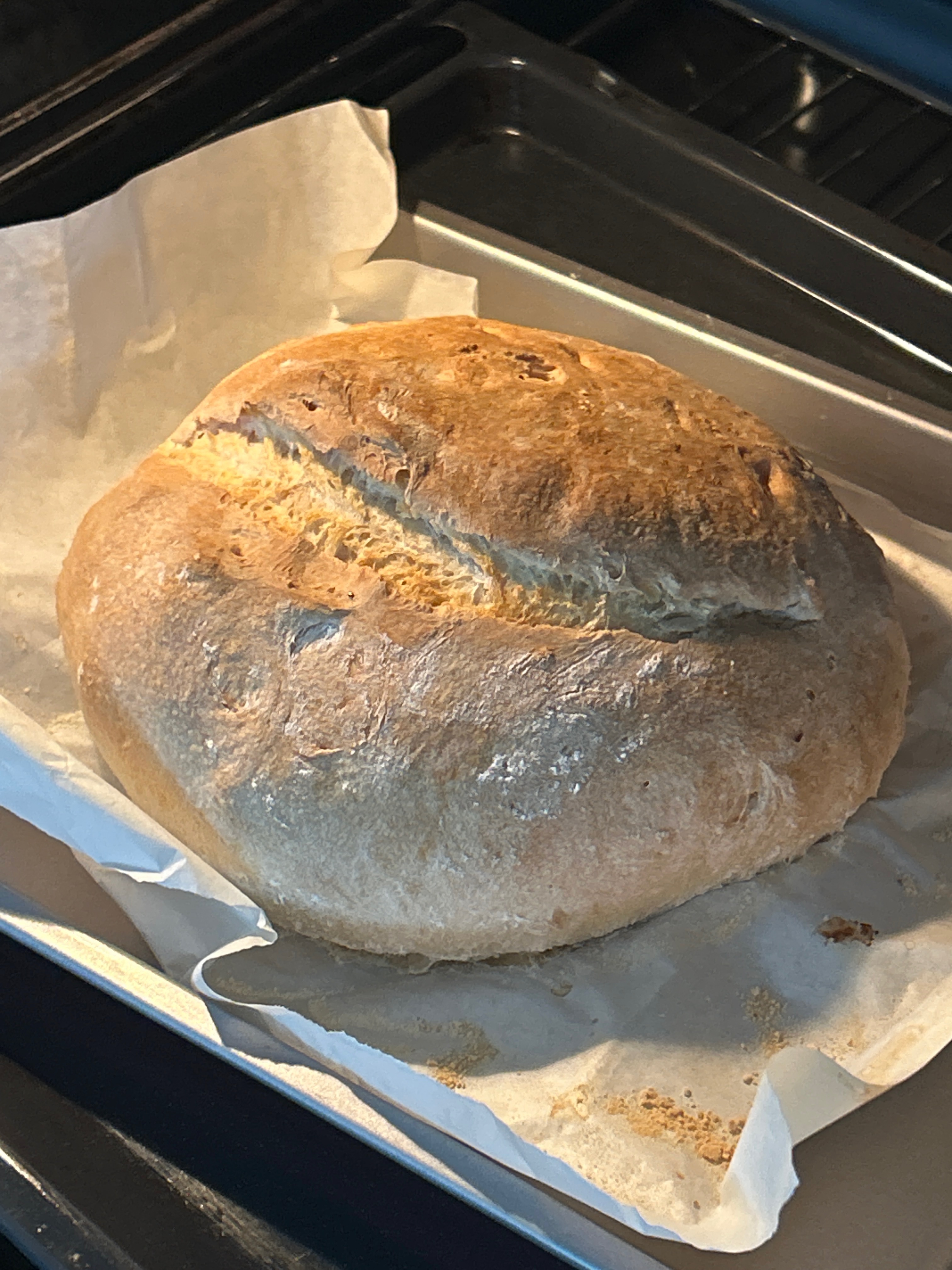
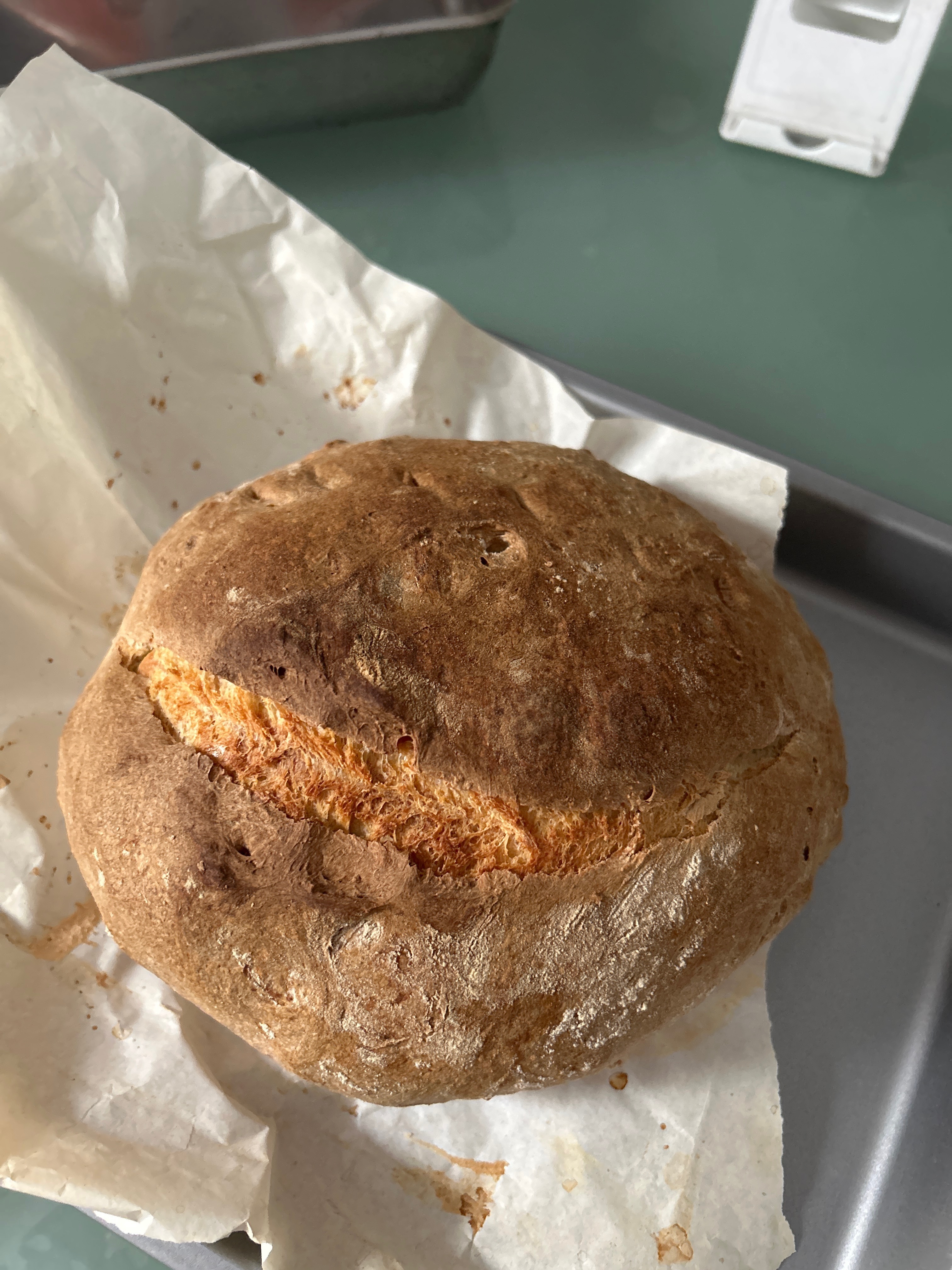
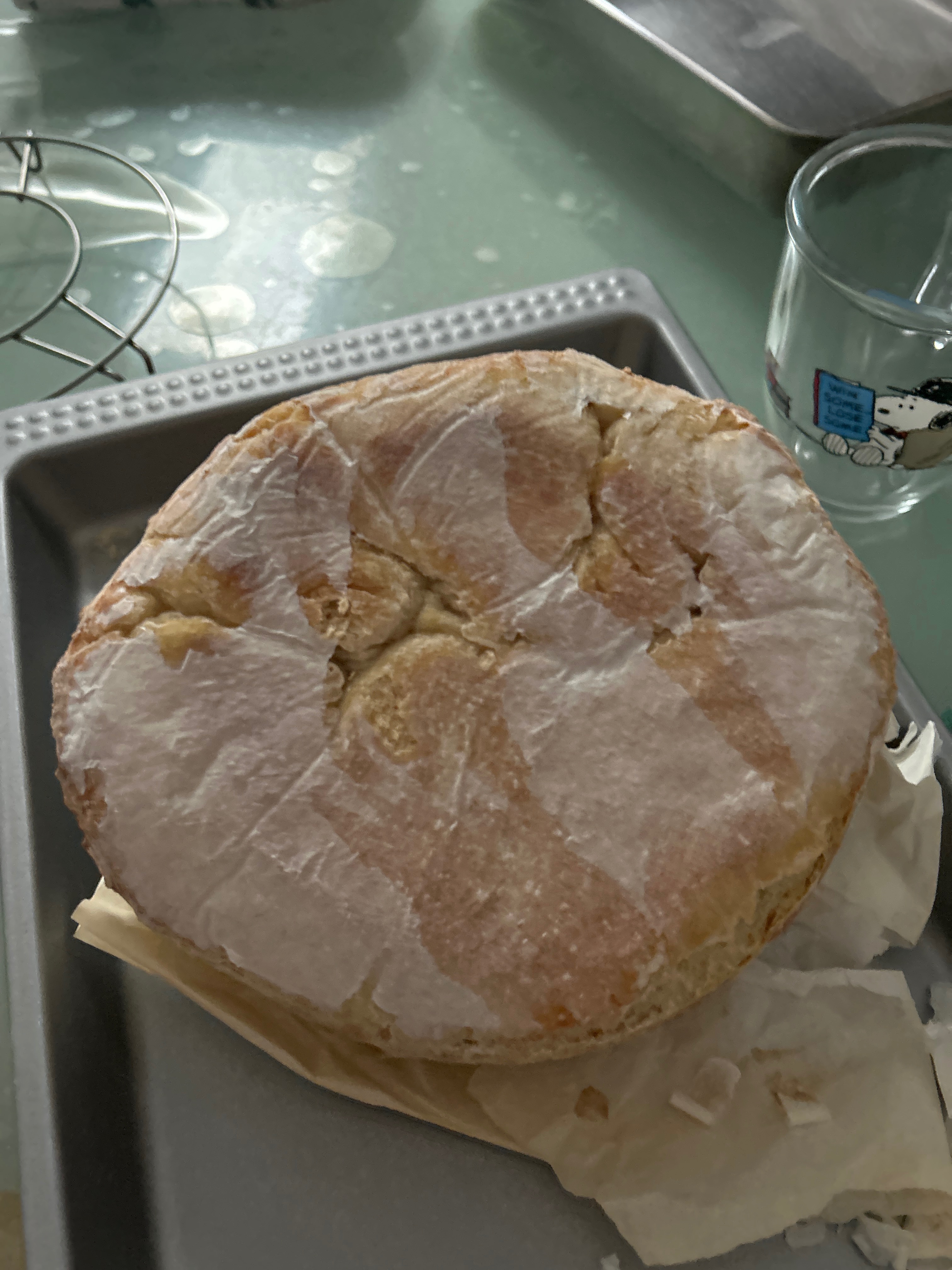
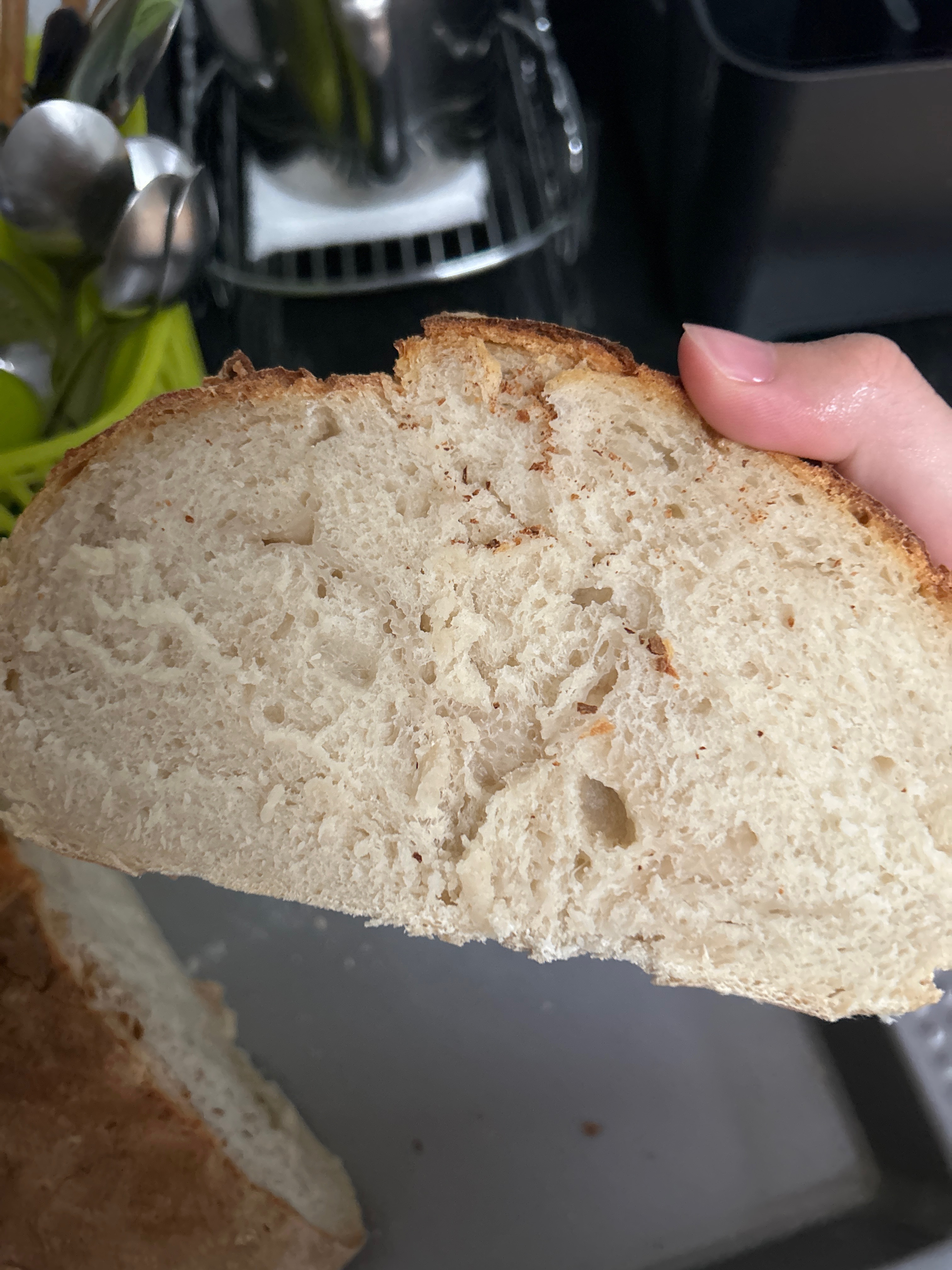
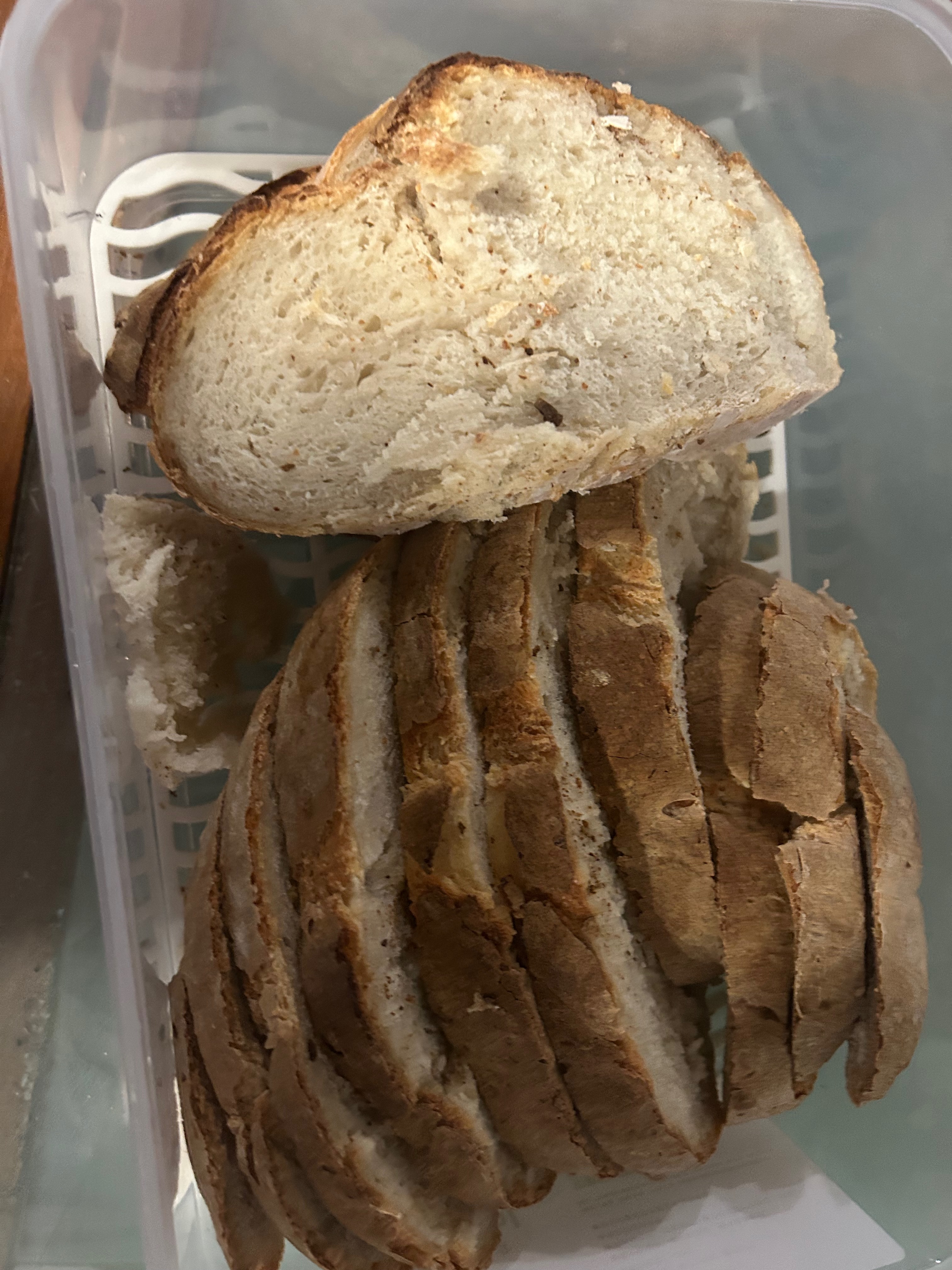
Notes from my first attempt:
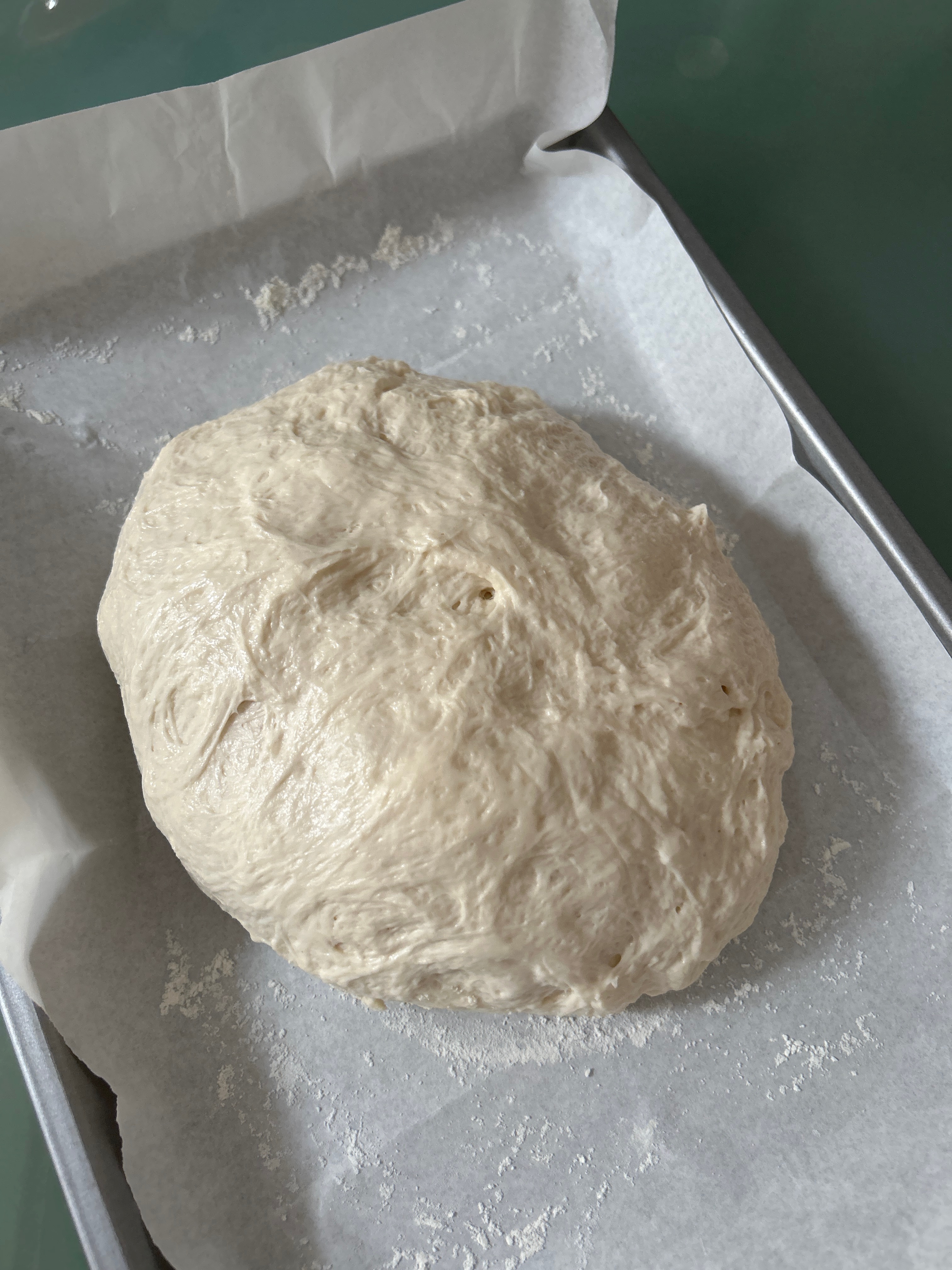
- I only used the bare minimum amount of water, which resulted in a dry dough. Next time, I need to increase hydration to achieve a more open crumb with larger bubbles.
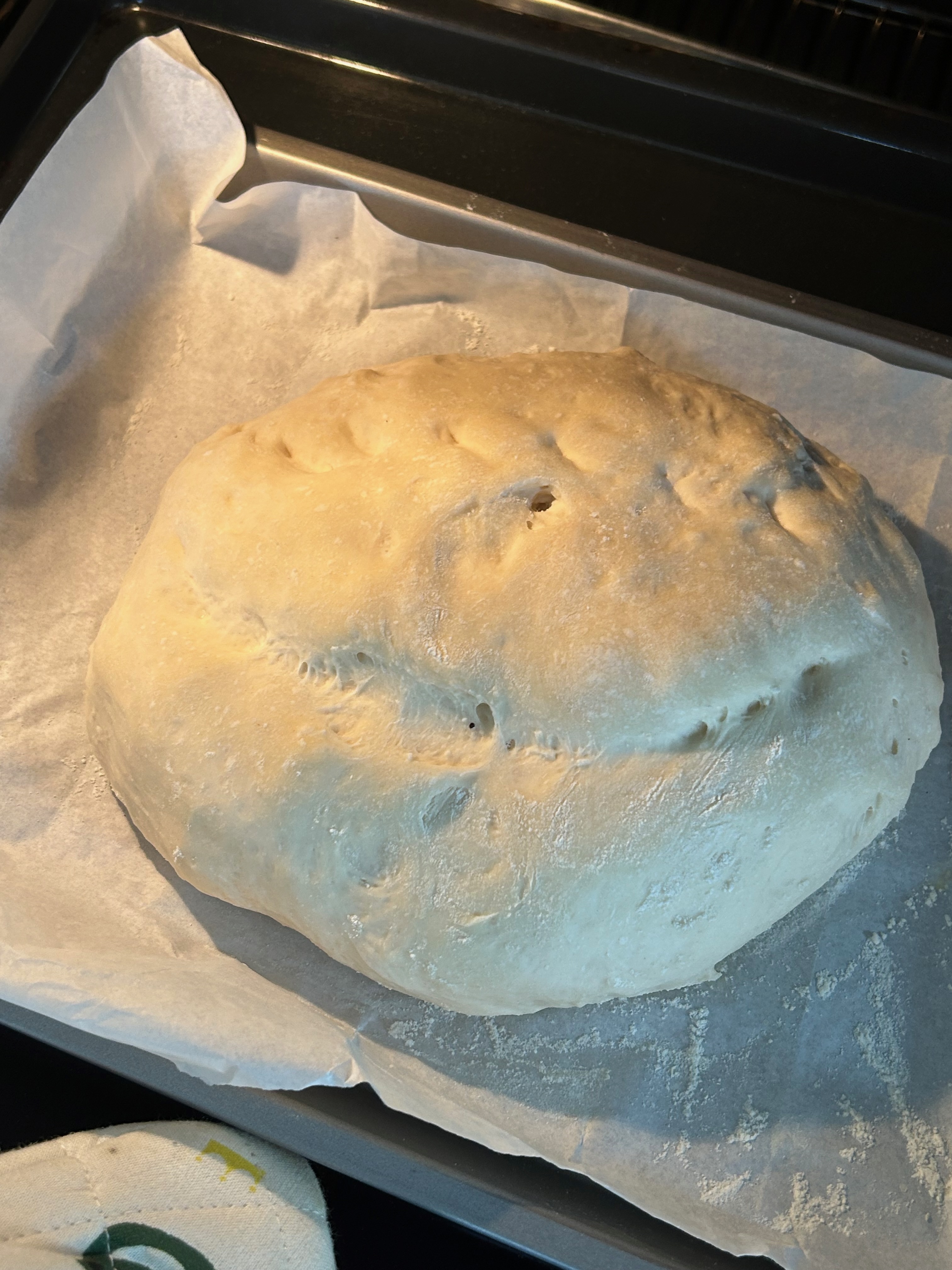
- I didn't score the dough deep enough, so it baked into the shape of a potato.
- Make sure to use the correct non-stick parchment paper; mine stuck to the bottom of the bread.
- MORE STRETCH AND FOLDS
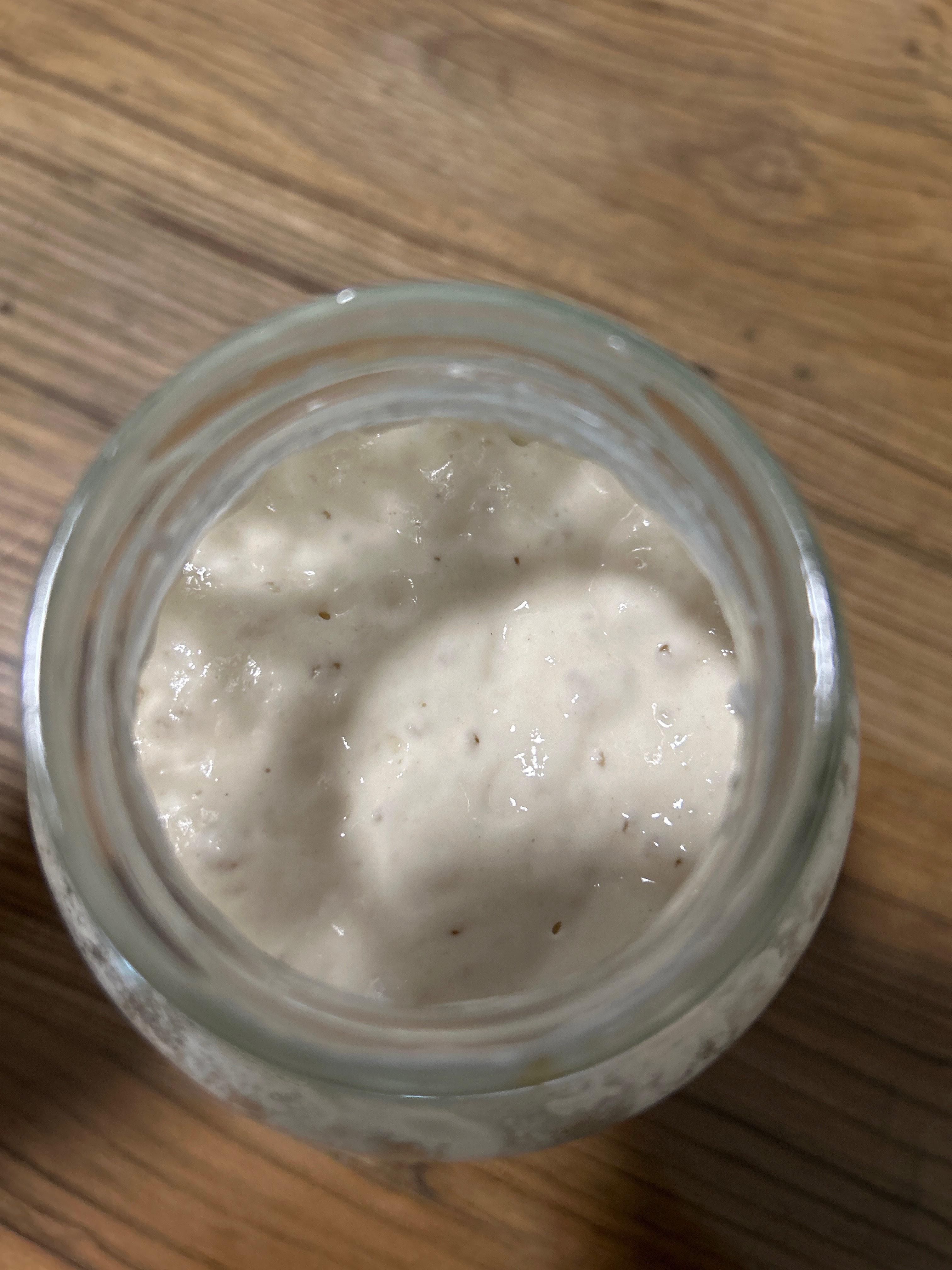
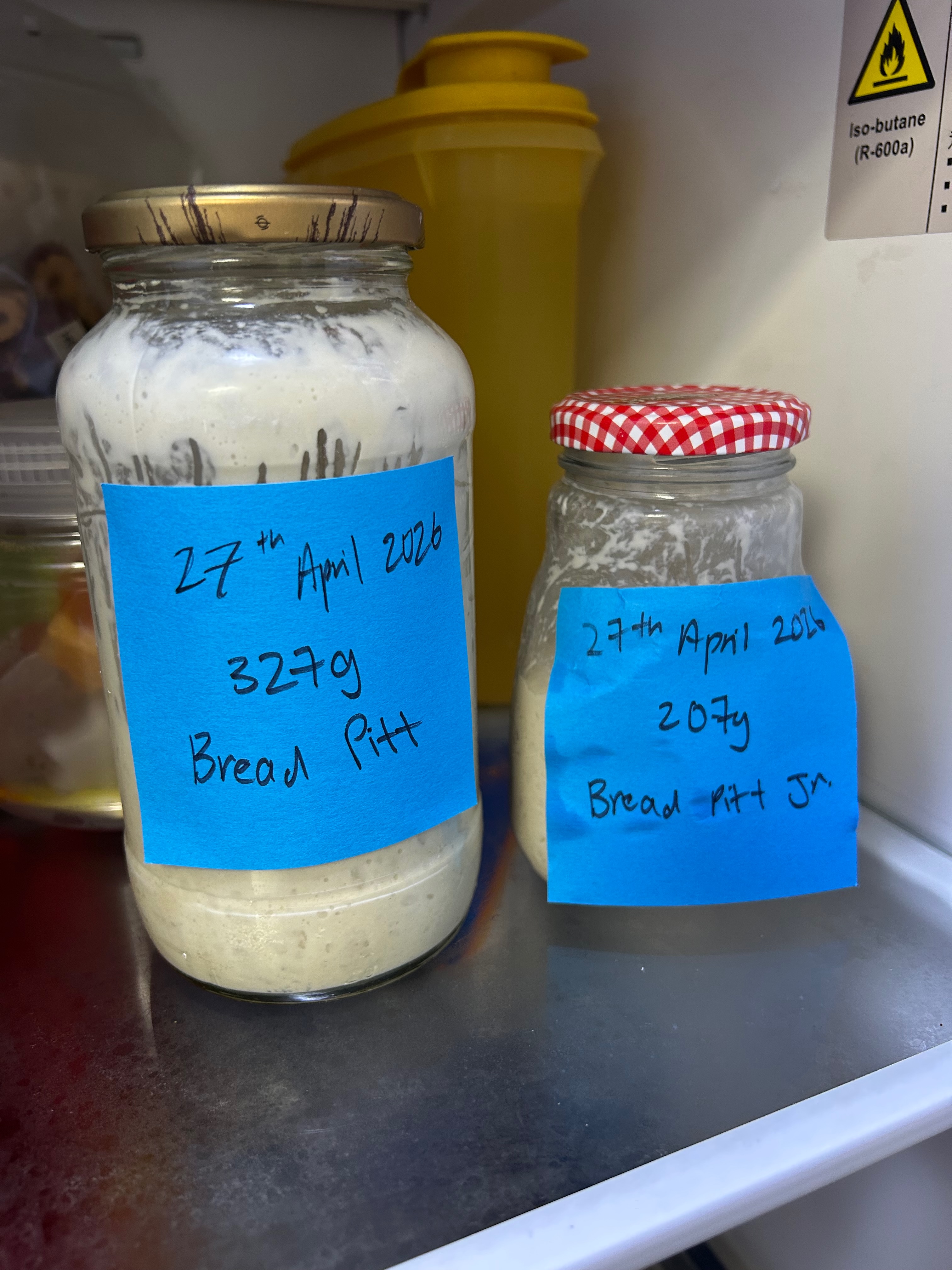
- To minimize waste, the sourdough starter can be sustained with just a few drops of water daily. I'll only feed it the normal amount when preparing for a bake.
- For a first attempt, the bread was pretty good.
Ingredients
- 150g bubbly, active sourdough starter
- 250g warm water
- 25g olive oil
- 500g bread flour
- 10g fine sea salt
- fine ground cornmeal or non-stick parchment paper
Method
-
Make The Dough: In a large bowl, add the sourdough starter, water and olive oil. Mix with a fork to combine, then add the flour and salt. Continue mixing until the dough becomes stiff, then squish it together with your hands to incorporate all the flour. The dough will be rough and shaggy. Cover the bowl with plastic wrap, reusable wrap, or very damp kitchen towel. Let rest (autolyse) for 30 minutes to 1 hour. After resting, return to the bowl and work the dough into a rough ball, about 15 seconds.
-
Bulk Rise (First Rise or Bulk Fermentation): Cover the bowl with lightly oiled plastic wrap. Let it rise in a warm place, ideally 70-75 F. The dough is ready when it no longer looks dense and has almost doubled in size.
-
Optional Step: Stretch & Fold The Dough: During the bulk fermentation, you can do a series of ‘stretch & folds’ to strengthen the dough. Start 30-45 minutes in: lift a portion of the dough, stretch it upwards, and fold it over itself. Rotate the bowl ¼ turn and repeat until you've come full circle (1 set). Do 1-2 additional sets, spaced ~1 hour apart.
-
Shape The Dough: Remove the dough onto a lightly floured surface. Starting at the top, fold the dough over toward the center. Turn slightly, and then fold over the next section. Repeat until you have come full circle. Flip the dough over, seam side down. Gently cup the sides and rotate in a circular motion to tighten the shape.
-
Second Rise: If you’ve used 250g water, you can do a free-form second rise in the Dutch oven. Line the pot with a piece of parchment paper or coat with cornmeal. Place the dough inside, cover and let rise for about 30 minutes to 1 hour. It's ready when slightly puffy, but not double in size. Preheat your oven to 450 F/ 232 C.
-
Score The Dough: Right before baking, make a shallow 2-3 inch slash (or longer) in the center of the dough using a bread lame, razor blade, or small sharp knife. The cut should be ~1/4-inch deep.
-
Bake The Dough: Place the bread in the oven on the center rack (lid on) and reduce the temperature to 400 F/ 204 C. Bake for 20 minutes, then remove the lid, and continue to bake (uncovered) for an another 40 minutes, until deep, golden brown. Remove the bread from the hot Dutch oven, and cool on a wire rack for at least an hour before slicing.